
NBS-nytt
27.11.2017
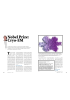
The Nobel Prize in chemistry in 2017 has been awarded to Richard Henderson, Joachim Frank and Jaques Dubochet for their contributions to "developing cryo-electron microscopy for the high-resolution structure determination of biomolecules in solution".
This award has been long awaited by the EM-community and highlights the increasing importance of this technology. For the interested reader a comprehensive summary of the Nobel laureates' achievements and contributions to the field are found on the Nobel Prize website, which also contains a comprehensive reference list (https://www.nobelprize.org/nobel_prizes/chemistry/la ureates/2017/advanced-chemistryprize2017.pdf). Reading the summary it is not surprising to find the names of many scientists from different fields that have contributed to the development of cryo-EM, illustrating the importance of multidisciplinarity. It also gives a great overview over the development in the field and the time span it took to arrive at the resolution obtainable nowadays, giving us structural insides not imagined a few decades ago.
I will not try to summarize the work of the three Nobel laureates and their groundbreaking contributions, but rather point the problems that had to be circumvented in order to arrive at todays cryo-EM capabilities, and focus mostly on the work of Jaques Dubochet. Naturally, a short explanation of the term cryo-EM is appropriate, as most readers might not be familiar with the technology. The word 'cryo' stems from Greek word cryo or cryos, meaning cold. But why do we need to perform electron microscopy in the cold? This concept is the foundation for cryo-EM and needs to be addressed in some detail.
Image formation in EM
Images in the TEM are generated by electrons passing through a very thin specimen, which they interact with in different manners; they can either be scattered elastically (which interact with the specima) or inelastically (which pass though the specimen without interactions). One can extract information from these interactions using amplitude contrast and phase contrast imaging. Due to the chemical composition of most biological material, containing mostly low atomic number elements, unstained samples give little amplitude c
Gå til medietI will not try to summarize the work of the three Nobel laureates and their groundbreaking contributions, but rather point the problems that had to be circumvented in order to arrive at todays cryo-EM capabilities, and focus mostly on the work of Jaques Dubochet. Naturally, a short explanation of the term cryo-EM is appropriate, as most readers might not be familiar with the technology. The word 'cryo' stems from Greek word cryo or cryos, meaning cold. But why do we need to perform electron microscopy in the cold? This concept is the foundation for cryo-EM and needs to be addressed in some detail.
Image formation in EM
Images in the TEM are generated by electrons passing through a very thin specimen, which they interact with in different manners; they can either be scattered elastically (which interact with the specima) or inelastically (which pass though the specimen without interactions). One can extract information from these interactions using amplitude contrast and phase contrast imaging. Due to the chemical composition of most biological material, containing mostly low atomic number elements, unstained samples give little amplitude c